
Why does my deadbolt key stop turning only when the door is closed?
Almost always, the bolt is rubbing or jamming against the strike plate or the hole in the door frame because the door no longer lines up with it exactly. With the door open, the bolt moves freely, so the key turns easily. Once the door is shut, the bolt has to enter the frame, and any misalignment makes the key feel stiff or stop.
Phones answered around the clock · free estimate
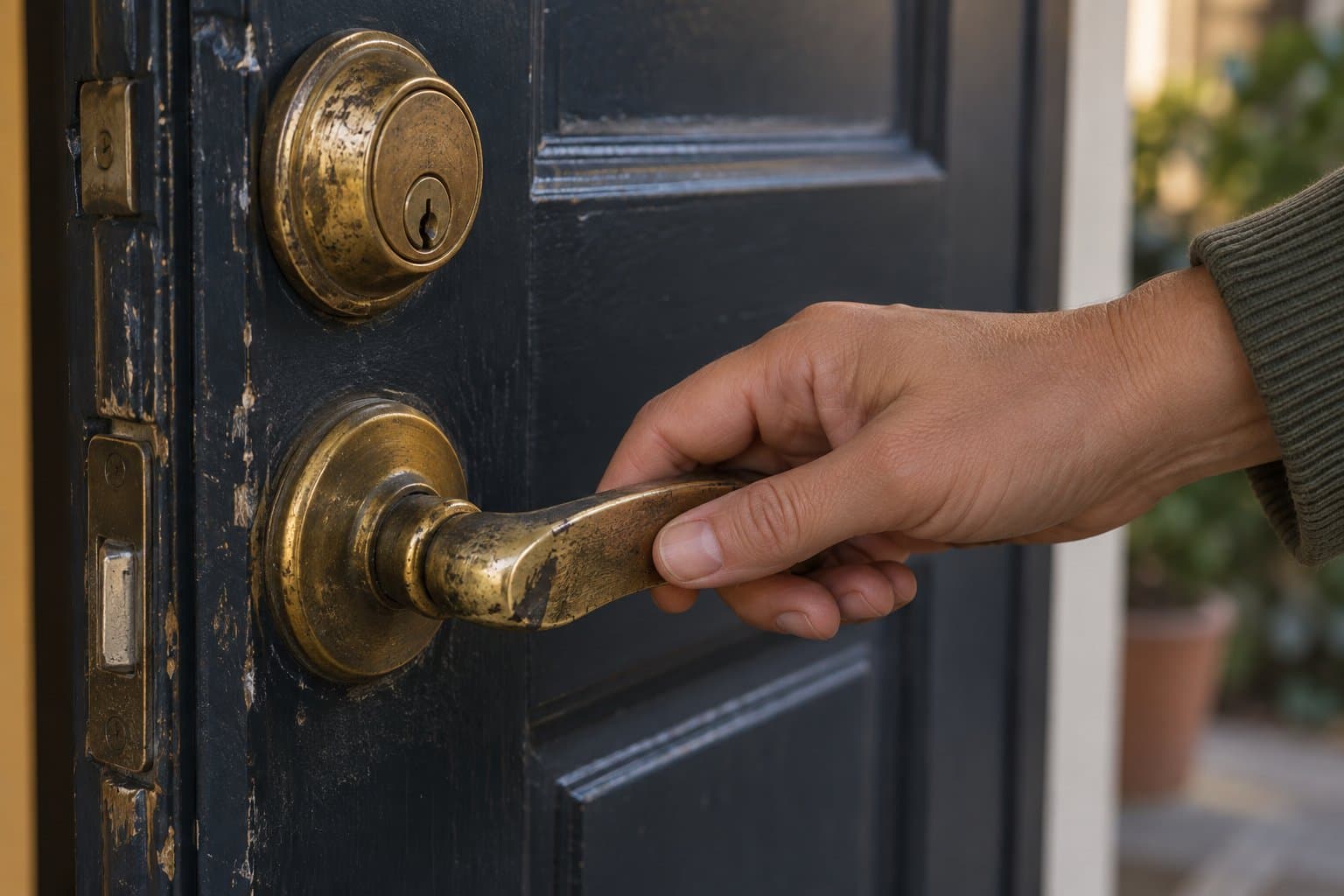
The lock itself is usually fine. If the key turns smoothly with the door open, the cause is the door and frame, not the cylinder. If it is stiff even with the door open, the cylinder is the likelier cause.
Why it happens
Doors move. A wooden door swells and shrinks with the seasons, hinge screws work loose over time, and a house settles. Any of these can shift the door a small amount, enough that the bolt no longer lands squarely in the hole cut for it in the frame.
When the bolt meets the edge of that hole or the strike plate, it binds. The key is then trying to push the bolt against resistance, and that resistance is what you feel as a stiff or stuck key. Pushing or pulling on the door as you turn the key often changes how it feels, which is another sign of alignment.
Grit, dirt or corrosion inside the cylinder can also make a key stiff. That tends to show up whether the door is open or closed, so the open-door test below helps you tell the two causes apart.
What you can check yourself
- Test the key with the door openStand inside with the door open and turn the key. If the bolt moves smoothly in and out, the cylinder is probably healthy and the problem is alignment.
- Look at the bolt and strike plateCheck the bolt when it is extended. Scuff marks or bright scratches on the bolt end, or on the edge of the strike plate or frame hole, show where it is catching.
- Check the hingesLook at the hinge screws on the door and the frame. If any are loose or sitting proud, the door may be sagging slightly. Tightening them gently is safe.
- Do not force the keyA stiff key that is forced is the usual way keys snap, and a snapped key is a bigger job than a stiff one. Stop if it will not turn with light pressure.
- Leave the oil aloneOil or a general-purpose spray tends to gum up a cylinder and leave it worse than before. If it needs lubricating, the locksmith will use the right product.
When to call a locksmith
Call a locksmith if the key is stiff even with the door open, if it turns only with a lot of effort, or if the door is now hard to lock or unlock from either side. Do not wait until the key will not turn at all. If you do end up locked out, the locksmith will ask for identification and proof that you are entitled to enter the home before opening anything, such as a driver's licence showing the address, a lease or a utility bill. This page is not a how-to for opening a lock.
One Call Locksmiths arranges the visit with an independent locksmith. The estimate is free, the locksmith gives you the price after looking at the lock, and work starts only once you agree it. Call (866) 690-5848. Licensing for locksmiths varies by state, so check with your state or city if you want to know how it works where you live.
What the locksmith will do
- Find the actual causeThe locksmith works out whether the lock, the door or the frame is at fault, by testing the lock on its own and then on the closed door.
- Adjust the strike plate and hingesWhere the door has moved, the strike plate and hinges are adjusted so the bolt lines up with the frame again.
- Clean, lubricate, re-pin or replace the cylinderIf grit, wear or corrosion is the problem, the cylinder is cleaned and lubricated, re-pinned, or replaced if it is past repair.
- Test the lock thoroughlyThe latch and deadbolt are tested open and closed several times, with the door both open and shut, before the job is finished.
Related questions
- Why does the problem seem worse at certain times of year?
- A wooden door swells and shrinks with the seasons, so how well it lines up with the frame can change. Grit and corrosion in the cylinder can also make a key feel different from one season to the next.
- Does a stiff deadbolt mean I need a new lock?
- Not necessarily. If the cause is a door that has moved, adjusting the strike plate or hinges often solves it. A cylinder that is worn or corroded may need re-pinning or replacing, which the locksmith can tell you when they look at it.
- Can I just keep using it if it still turns with some effort?
- It is better to get it looked at early. Turning a key with extra effort is how keys break in the lock, and an adjustment now is usually simpler than a repair later.
- What affects the cost of fixing it?
- The main factors are whether the fix is an adjustment to the door and frame or work on the cylinder, whether parts are needed, how many doors are involved and the time of day. The estimate is free, and the price is agreed before work starts.
One call
Free estimate. The price is agreed before the work starts.
More from One Call Locksmiths
Local pages
Answers
Free tool
Or send us a message
Leave your details and what is going on, and someone from the team will call you back.
One Call Locksmiths arranges the visit; the locksmith does the work and gives you the price.