
What does it mean when the key turns but the deadbolt doesn't move?
It means the turning of the key is not reaching the bolt. Either something inside the lock has worn or broken between the cylinder and the bolt, or the bolt is physically held up by the door and frame so it cannot slide.
Phones answered around the clock · free estimate
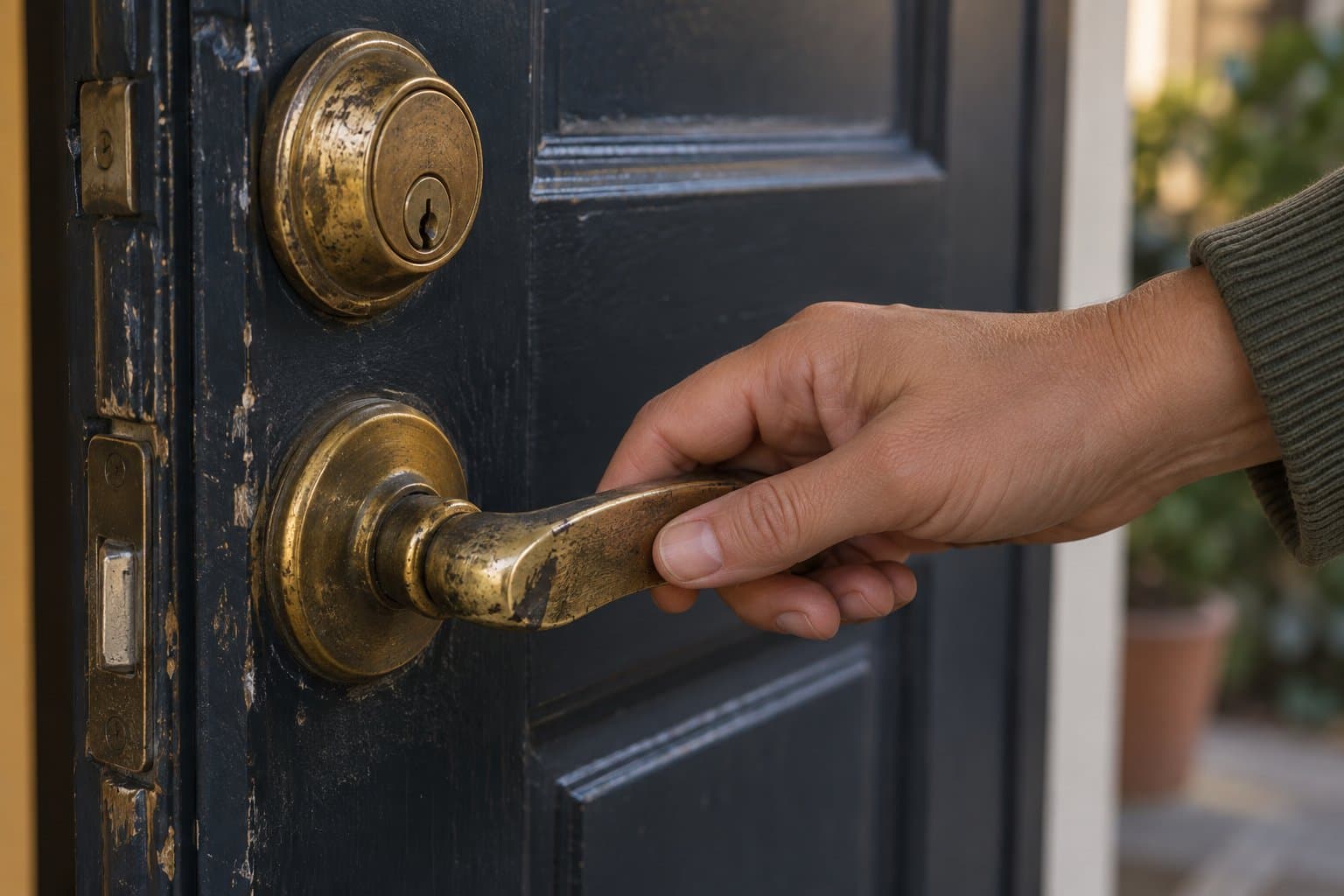
The deciding detail is whether the problem happens with the door open or only with it shut. If the bolt moves freely with the door open but sticks when it is closed, the door and strike plate are the likely cause. If it will not move even with the door open, the problem is inside the lock.
Why it happens
A deadbolt is a chain of parts. The key turns the cylinder, the cylinder turns a small connecting piece, and that piece draws the bolt in or pushes it out. If any link wears, loosens or snaps, the key still feels as though it turns, but nothing moves the bolt. This is common on older locks that have had years of daily use.
The second cause is alignment. Wooden doors swell and shrink with the seasons, and hinges loosen over time, so the door sits slightly off. The bolt then presses against the edge of the strike plate or the hole in the frame and cannot travel. The lock may be perfectly sound, and a small adjustment of the plate or hinges is all it needs.
Grit, corrosion and dried lubricant inside the cylinder can also make a key feel rough or turn only partway. That is a related problem, but a different one from a key that turns fully with no result at the bolt.
What you can check yourself
- Try the thumb turn from insideIf you are inside the home, see whether the inside knob or thumb turn moves the bolt. If it does, the fault is likely in the key side of the lock. If it does not, the fault is in the bolt mechanism itself or its alignment.
- Test with the door openIf you can get to the door while it is open, work the bolt with the key a few times. A bolt that moves freely when open but sticks when shut points to the door or the strike plate.
- Look at the gap and the plateClose the door gently and look at how the bolt lines up with the hole in the frame. Rubbing marks on the strike plate or a door that sits crooked in the frame are signs the door has moved.
- Check the key itselfTry a spare key if you have one. A worn or bent key can turn the cylinder without doing its job properly. Do not lean on the key or add extra pressure, because that is how keys snap.
- Hold off on oil and spraysA general-purpose spray can gum up the cylinder and make the problem worse. It is better to leave the lock as it is until a locksmith has looked at it.
When to call a locksmith
Call if the bolt will not move even with the door open, if the key feels loose or spins freely, or if the door is stuck shut or will not lock when you leave. Call too if the problem comes and goes, because a part that is wearing out tends to get worse. You can reach us on (866) 690-5848 and we will arrange a visit with an independent locksmith.
If the door is currently locked and you cannot get in, the locksmith checks identification and proof that you are entitled to enter before opening anything. A driver's licence with the address, a lease, a utility bill, or a neighbour or manager who can confirm it will all do. The locksmith looks at the lock, gives you the price, and starts work only once you agree it. The estimate is free. If a child or an animal is shut inside, call 911 first.
What the locksmith will do
- Find which part is at faultThe locksmith separates the lock from the door and the frame as the cause, so you know whether you need a lock repair or a door adjustment.
- Repair or replace the lockWhere the fault is inside the lock, the cylinder is cleaned and re-pinned, or replaced if it is worn beyond a sensible repair.
- Adjust the strike plate and hingesIf the door has moved with the seasons, the plate and hinges are adjusted so the bolt lines up with the frame again.
- Test before leavingThe latch and deadbolt are tested open and closed several times, and you see them working before the job is finished.
Related questions
- Can I keep using a deadbolt that sometimes works and sometimes doesn't?
- It is better to have it looked at soon. A lock that fails some of the time usually has a part that is wearing, and it may stop working altogether at an awkward moment, such as with the door locked.
- Does this mean I need a whole new lock?
- Not always. If the door has simply shifted, an adjustment may be enough, and if the cylinder is worn it can often be repaired. The locksmith tells you which it is and gives the price before any work begins.
- Why does the problem seem worse in some weather?
- Wooden doors swell and shrink with the seasons, which changes how the bolt lines up with the frame. Grit and corrosion in the cylinder can also feel different as the weather changes.
- How is the cost worked out?
- It depends on the type of lock, how many doors are involved, the time of day, any parts needed, and whether a key has to be cut. The estimate is free and the price is agreed before work starts.
- Does my state require locksmiths to be licensed?
- It varies. Some states license or register locksmiths, others leave it to cities or counties, and some do not regulate the trade at all. Check with your own state or city. One Call Locksmiths arranges the visit and holds no licence itself.
One call
Free estimate. The price is agreed before the work starts.
More from One Call Locksmiths
Local pages
Answers
Free tool
Or send us a message
Leave your details and what is going on, and someone from the team will call you back.
One Call Locksmiths arranges the visit; the locksmith does the work and gives you the price.