
Lock stiff or will not turn in Tallahassee, FL
The key slides in. It stops. You push harder and nothing moves, or it turns a little and then jams. The lock has not failed all at once — it has been getting stiffer for weeks and today it finally refused. That is the usual story when people call about this.
Phones answered around the clock · free estimate
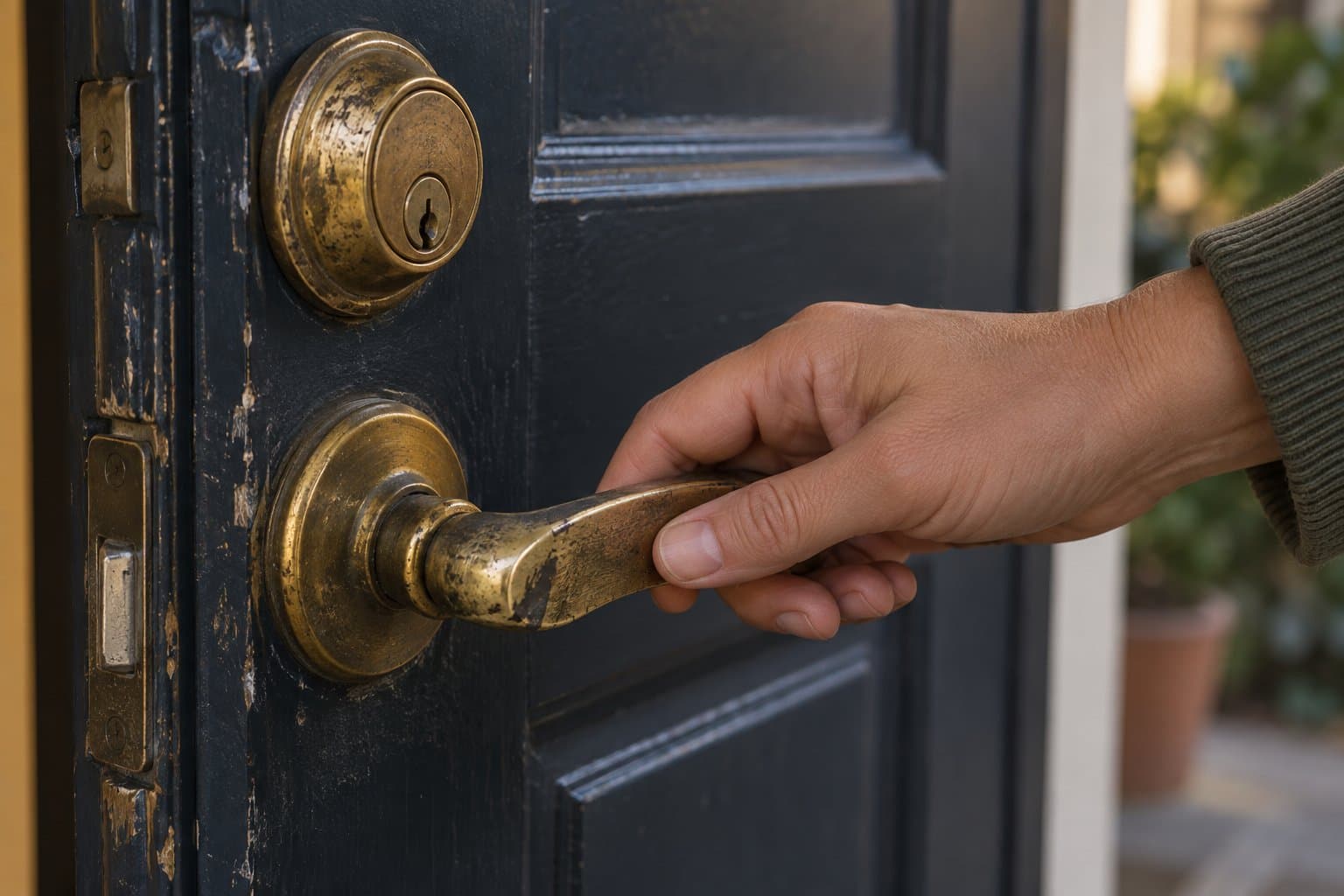
There are two common answers in Tallahassee, and the weather decides which one it is. High humidity most of the year swells wood doors and frames, so the bolt binds against the strike plate and the lock takes the blame. The other answer is inside the cylinder: grit and corrosion from heavy rain, wind-driven water after a storm, or years of damp under the city's tree canopy. Older hardware on the mid-century brick ranch homes near the core is especially prone to the second kind.
While you wait — please don't
- Stop forcing the key. Forcing a stiff key is how it snaps, and a broken key in the cylinder turns a small repair into a bigger one.
- Do not use oil or a general-purpose spray. Oil and household sprays attract dust and grit and gum a cylinder up worse than it was.
- Do not use pliers on the key. Extra leverage snaps the key or twists it out of shape, and a bent key will not work any lock in the house.
- Do not keep slamming the door to make it catch. If the door has moved and the bolt is binding, slamming it damages the strike plate, the frame and the hinges.
What the technician does
- Identification firstThe locksmith asks for identification and proof that you are entitled to enter the property before opening or working on anything. Standard practice in Florida is photo ID plus something tying you to the address, such as a lease, deed or utility bill.
- The price before the workYou get a free estimate. The locksmith gives you the price first and you approve it before anything starts.
- Finding the real causeThe lock is looked at separately from the door and the frame, because a stiff key and a binding bolt feel the same from outside. That tells the locksmith whether the problem is inside the cylinder or in how the door now sits.
- The cylinder cleaned, lubricated or replacedWhere the cylinder is the cause, it is cleaned and properly lubricated. If it is worn past that, it can be re-pinned or replaced.
- The door and frame adjustedWhere the door has moved, the strike plate and hinges are adjusted so the bolt lines up and drops in cleanly again.
- Tested before anyone leavesThe latch and the deadbolt are worked open and closed several times, with the door shut and open, so you know it turns easily rather than just once.
Why this happens in Tallahassee, FL
Tallahassee sits about 25 miles inland from the Gulf, so direct salt-air corrosion is not the main driver here the way it is on the coast. Humidity is. Long, very humid summers and frequent afternoon thunderstorms keep exterior hardware damp, and the famous canopy roads and dense live oak and pine cover keep homes shaded so things dry slowly. Hurricane season from June to November adds wind-driven rain and fine grit that works into keyways, which is why stiff locks often show up in the weeks after a named storm passes through.
Winter matters too. Unlike most of Florida, this part of the state gets multiple freezes and hard frosts each year, and that movement stresses weatherstripping, gate actuators and lock cylinders. Housing stock plays its part as well. A large share of the core, in neighbourhoods like Betton Hills, Myers Park, Lafayette Park and Indian Head Acres, dates to the 1950s through 1970s, so aging exterior hardware is a common call. In the newer north-side subdivisions such as Killearn Estates, Bradfordville and Ox Bottom, and in Southwood, gates and garage side doors sit out in the weather year-round and stiffen up first.
Questions people ask
- Can a stiff lock be repaired, or does it have to be replaced?
- Often it can be repaired. A cylinder can be cleaned, lubricated and re-pinned, and a strike plate or hinge can be adjusted where the door has shifted. Replacement is for hardware that is worn or corroded past repair, and the locksmith tells you which it is and what it costs before starting.
- Why does my lock stick in summer and work fine other times?
- Prolonged heat and humidity swell wood doors and frames, so the deadbolt binds against the strike plate. Tallahassee's long humid summers make that a seasonal pattern on wood-frame homes. Adjusting the strike plate and hinges usually sorts it out.
- Is a locksmith in Tallahassee licensed by the state?
- Florida does not issue a statewide locksmith license and there is no state locksmith licensing board. The trade is regulated at the county or municipal level, and requirements vary and change, so check current rules with the local consumer protection or licensing office where the work is done. The Florida Department of Agriculture and Consumer Services and the Florida Department of State handle general business registration and consumer complaints.
- What do I need to show the locksmith?
- Government-issued photo identification plus something linking you to the address — a lease, deed or utility bill, or confirmation from a property manager or landlord. The locksmith confirms entitlement before opening or working on anything. This is normal practice across Florida.
- Are you the locksmith?
- No. One Call Locksmiths is a referral and scheduling service that arranges work with independent locksmiths across all fifty states. We take your details and arrange the job; the independent locksmith does the work and gives you the price.
One call
One call to (866) 690-5848 and we arrange lock repair in Tallahassee with an independent locksmith. The estimate is free and you approve the price before any work starts.
Something else in this area
- Locked out of the house
- Lost car key or fob
- Keys lost or stolen
- Key broke in the lock
- Just moved in
- New or upgraded locks
- Business locked out
One Call Locksmiths arranges the visit; the technician does the work and gives you the price.