
Lock stiff or will not turn in Fort Lauderdale, FL
The key slides in. It stops. You push harder and nothing moves, or it moves a little and then binds. That is the usual way this starts. The key is almost certainly fine. The problem is either inside the cylinder or in how the door now sits in its frame. A lock that has gone stiff rarely gets better on its own, and the next turn is often the one that snaps the key off in the keyway.
Phones answered around the clock · free estimate
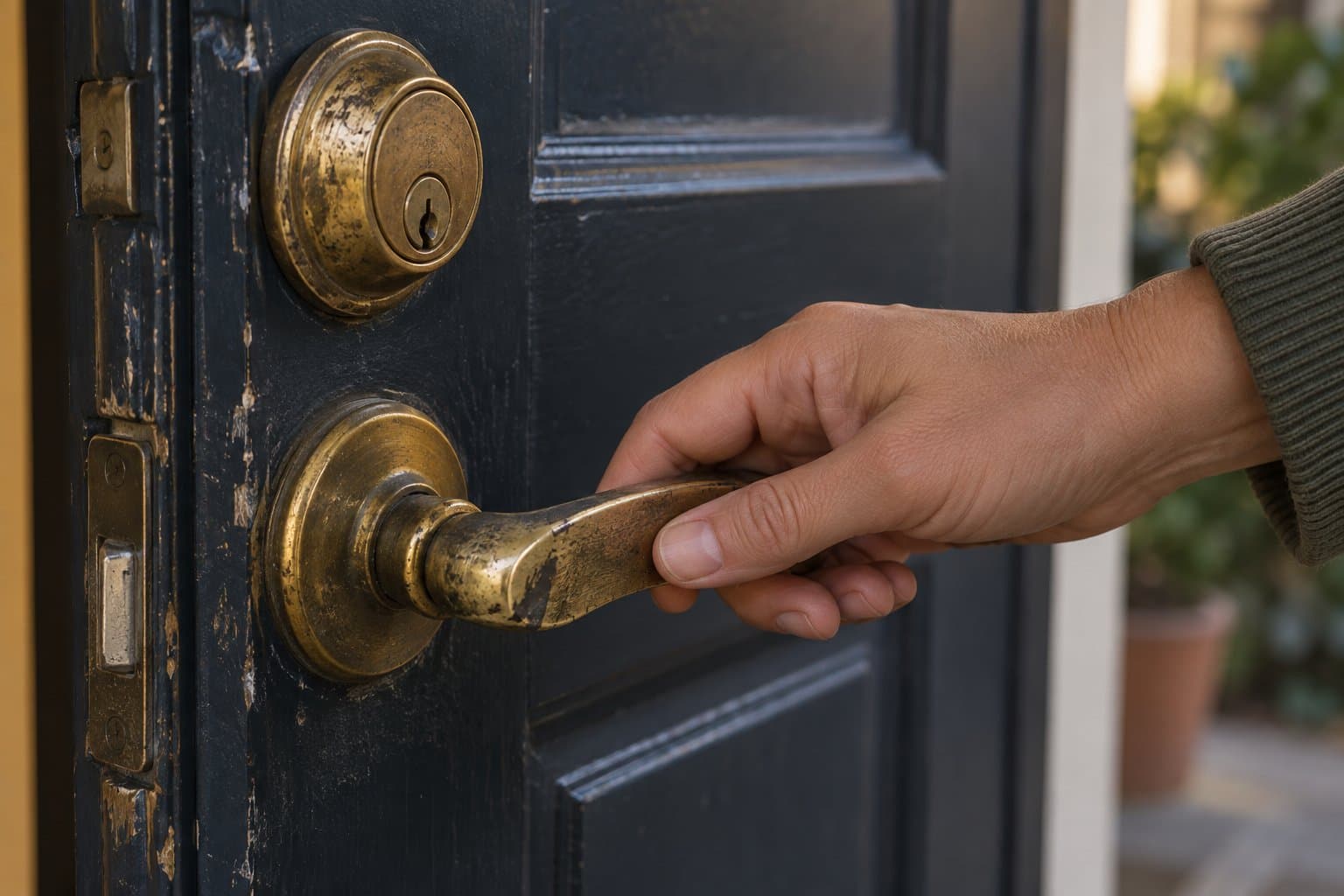
In Fort Lauderdale there are two usual answers, and the weather here decides which. Salt air off the Atlantic and the canals corrodes lock cylinders and exterior hardware far faster than inland, so pitting and rust inside the cylinder is common on anything facing the water. The other answer is movement. Florida's heat and humidity swell wood doors and frames until the deadbolt binds against the strike plate, and blown sand near the beach or fine grit after a storm works its way into the keyway. Either way the fix is the lock and the door, not the key.
While you wait — please don't
- Stop forcing the key. Forcing a stiff key is how it snaps, and a broken key inside the cylinder turns a small repair into a bigger one.
- Do not spray oil or WD-40 in the keyway. Oil and general-purpose sprays attract grit and gum a cylinder up worse than it was before.
- Do not use pliers on the key. The extra leverage breaks the key off flush with the face of the lock, where you can no longer reach it.
- Do not shoulder or kick the door. You can damage the frame, the hinges and the strike plate, and on a concrete block home that is a far more expensive repair than the lock.
What the technician does
- Identification firstThe locksmith asks for identification and proof that you are entitled to enter the property before opening or working on anything. Standard practice in Florida is photo ID plus something tying you to the address, such as a lease, a deed or a utility bill.
- The price before the workYou get a free estimate and the locksmith gives you the price before any work starts. Nothing begins until you approve it.
- The lock is separated from the doorThe first job is working out whether the fault is in the lock itself or in the door and the frame around it. Those are two different repairs and the wrong one fixes nothing.
- The cylinder is cleaned, lubricated or replacedIf the cylinder is the cause, it is cleaned and properly lubricated, then re-pinned or replaced where corrosion or wear has gone too far.
- The strike plate and hinges are adjustedWhere the door has moved and the bolt is catching, the strike plate and hinges are adjusted so the deadbolt lines up and throws cleanly again.
- Everything is testedThe latch and the deadbolt are opened and closed several times, with the door shut and open, so you can see it working before the locksmith leaves.
Why this happens in Fort Lauderdale, FL
Fort Lauderdale is called the Venice of America for a reason, and all that canal and Intracoastal frontage comes at a cost to metal. Salt spray and constant humidity corrode deadbolts, exterior lock cylinders, hinges and gate hardware years earlier than the manufacturers' averages suggest. If you are in Rio Vista, Las Olas Isles, Coral Ridge or anywhere along the water, a cylinder that has gone stiff is often simply reaching the end of a shortened life rather than suffering a one-off fault. Inland streets in Victoria Park, Imperial Point or Croissant Park see it too, just more slowly.
The housing stock matters as well. Much of the city is 1950s–1970s single-story concrete block and stucco on slab, with hardware that may be decades old, alongside high-rise condos and gated, HOA-governed communities where entry doors, gates and shared hardware all take the same salt and humidity. Hurricane season runs June 1 to November 30, and the wind-driven rain and grit that come with it find their way into exterior locks. Snowbird season from November through April brings its own version: a home shut up for months, a gate or front door lock that has sat untouched in humid air, and a key that will not turn on the first day back.
Questions people ask
- Is it the key or the lock?
- Usually the lock. If the same key works in another lock, or a spare key behaves exactly the same way in this one, the cylinder or the door alignment is the cause. The locksmith checks the lock separately from the door and frame to be certain.
- Can a corroded lock be repaired, or does it need replacing?
- It depends how far the corrosion has gone. A cylinder that is dirty or gritty can often be cleaned, lubricated and re-pinned, but one that is badly pitted from years of salt air is usually better replaced. The locksmith tells you which it is and gives you the price before starting.
- Why does this keep happening on my waterfront property in Fort Lauderdale?
- Salt air off the Atlantic and the canals attacks metal hardware continuously, and Fort Lauderdale's year-round humidity keeps it working. Waterfront homes here commonly need lock cylinders, hinges and gate hardware serviced earlier than homes further inland.
- Do I have to prove the property is mine?
- Yes. The locksmith asks for identification and proof that you are entitled to enter before opening anything. Photo ID with a lease, deed, utility bill or confirmation from a property manager is the normal way to handle it.
- Are locksmiths licensed in Florida?
- Florida does not issue a statewide locksmith license and has no state locksmith licensing board. The trade is regulated at county or municipal level instead, and Broward County has historically required local locksmith registration. Rules change, so check current requirements with the county or city licensing or consumer protection office.
One call
One call to (866) 690-5848 and we arrange a locksmith to look at your stiff lock anywhere in Fort Lauderdale. The estimate is free and you approve the price before any work starts.
Something else in this area
- Lost car key or fob
- Keys lost or stolen
- Key broke in the lock
- Just moved in
- New or upgraded locks
- Business locked out
One Call Locksmiths arranges the visit; the technician does the work and gives you the price.