
What does it mean when the key inserts fully but won't rotate in the lock?
It means the key is reaching the cylinder but something is stopping the cylinder, or the bolt it drives, from moving. The usual causes are a worn or bent key, grit or corrosion inside the cylinder, or a door that has shifted so the bolt is pressing against the frame.
Phones answered around the clock · free estimate
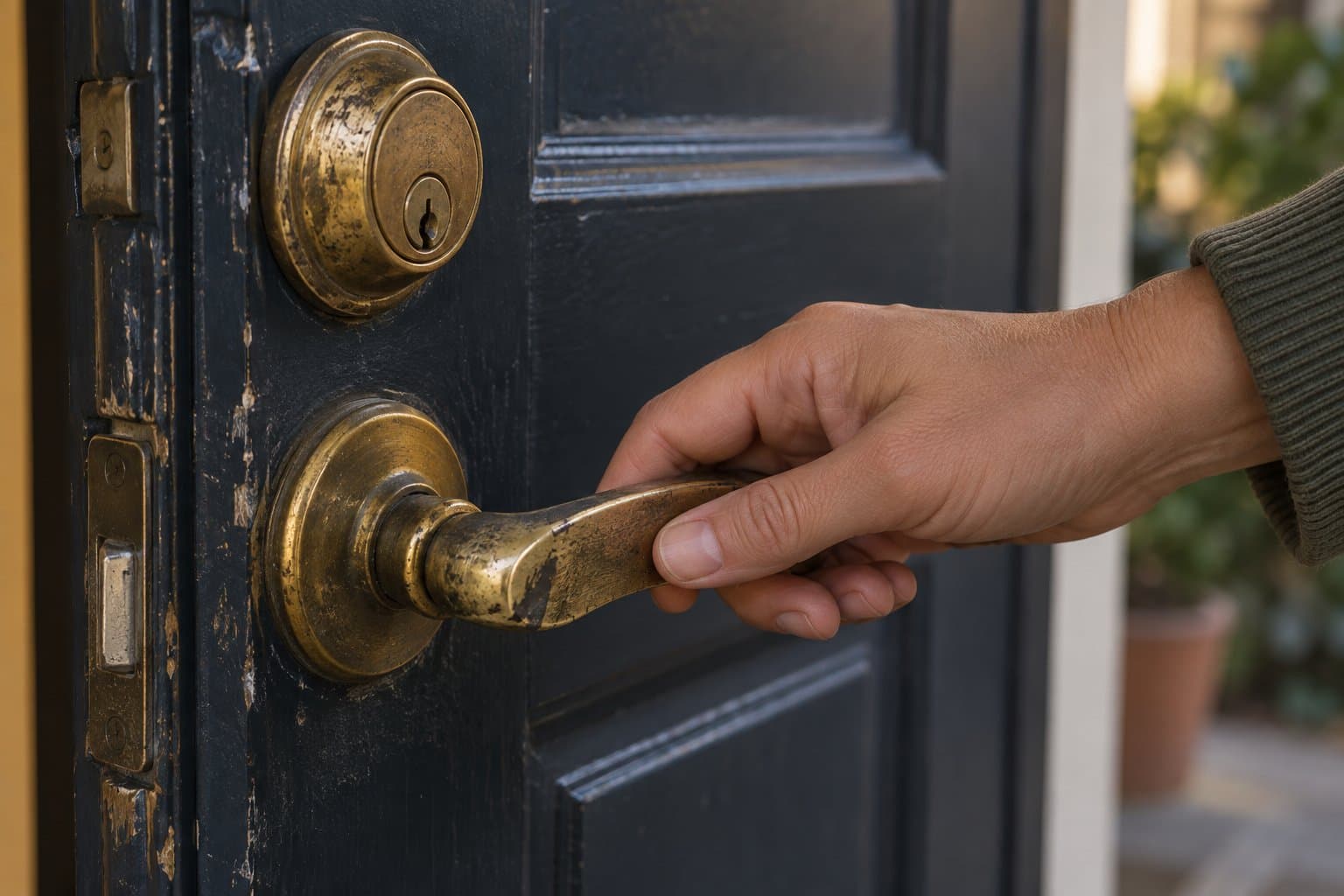
The difference that matters is whether the problem is in the lock or in the door. A lock that turns freely when the door is open but stiffly when it is closed points to the door and frame. A lock that is stiff even when separated from the door points to the cylinder or the key.
Why it happens
Inside the cylinder, small parts have to line up exactly with the cuts on your key. If the key has worn down, or the parts inside have worn or collected dirt, they no longer line up cleanly. The key still slides in all the way, but the cylinder will not rotate.
The second common cause is the door itself. Wooden doors swell and shrink with the seasons, and hinges can loosen over time. When that happens the bolt or latch no longer lines up with the strike plate on the frame and binds against it. The key is turning the right way, but the bolt cannot move.
Because both causes feel the same at the keyhole, it is hard to tell them apart by feel alone. Forcing the key is the one thing to avoid, since a stiff key under pressure is how it snaps in the lock.
What you can check yourself
- Try a spare keyIf a spare key turns the lock, your everyday key is worn or bent and probably just needs to be cut again from the original or the spare.
- Look at the keyCheck for bends, cracks or rounded, shiny edges on the cuts. A key that looks visibly worn is a likely cause.
- Test the lock with the door openIf you are inside and the door is open, turn the key or thumb-turn. If it moves easily, the lock is probably fine and the door or strike plate has moved.
- Check that the door is fully closedA door that is not sitting properly in its frame can leave the bolt pressed against the strike plate. Make sure nothing is holding it ajar.
- Leave the oil and sprays aloneOil and general-purpose sprays can gum up a cylinder and make a stiff lock worse. Stop turning if you feel resistance and do not force the key.
When to call a locksmith
Call a locksmith if a spare key behaves the same way, if the lock is stiff with the door open, or if the key will not turn at all. Call as well if you are unsure whether the lock or the door is at fault. You can reach One Call Locksmiths on (866) 690-5848, and we arrange the visit with an independent locksmith.
If the stuck lock has left you outside, the locksmith will ask for identification and proof that you are entitled to enter the home, premises or vehicle before opening anything. A driver's licence showing the address, a lease, a utility bill, vehicle registration or insurance, or a neighbour or manager who can confirm it will all do. This is also why this page cannot be used as a how-to. The estimate is free, and the locksmith gives you the price after looking at the lock. Work starts only once you agree it.
What the locksmith will do
- Find whether it is the lock or the doorThe locksmith looks at the lock separated from the door and frame, so you know which one is causing the problem.
- Clean and restore the cylinderWhere grit or corrosion is the cause, the cylinder is cleaned and lubricated with the right product, or re-pinned so it works with your key again.
- Replace the cylinder if neededIf the cylinder is too worn to repair sensibly, it is replaced and you receive working keys.
- Adjust the strike plate and hingesWhere the door has moved, the strike plate and hinges are adjusted so the bolt meets the frame cleanly.
- Test the latch and deadboltThe latch and deadbolt are tested open and closed several times before the job is finished.
Related questions
- Will a new key fix a lock that won't turn?
- Sometimes. If the old key is worn and the lock is in good condition, a freshly cut key can turn it normally. If the cylinder itself is dirty or worn, the new key will meet the same resistance, so a locksmith needs to look at the lock.
- Why is the lock stiffer in some weather?
- Wooden doors can swell and shrink with the seasons, which changes how the bolt meets the frame. Grit or corrosion in the cylinder can also make a lock feel different from one week to the next.
- Can I use oil to loosen it?
- It is best not to. Oil and general-purpose sprays can gum up a cylinder and leave it worse than before. A locksmith uses the right product once the cause is known.
- How much will it cost?
- It depends on the lock type, how many doors are involved, the time of day, any parts needed and whether a key has to be cut. The estimate is free, and the price is agreed with you before work starts.
- Do locksmiths need a licence?
- It varies by state. Some states license or register locksmiths, others leave it to cities or counties, and some do not regulate the trade. Check with your own state or city for the rules that apply to you.
One call
Free estimate. The price is agreed before the work starts.
More from One Call Locksmiths
Local pages
Answers
Free tool
Or send us a message
Leave your details and what is going on, and someone from the team will call you back.
One Call Locksmiths arranges the visit; the locksmith does the work and gives you the price.