
My key broke off in the deadbolt, what should I do first?
Stop using the lock and keep both pieces of the key. Don't push anything into the keyway, and call a locksmith to take the broken piece out.
Phones answered around the clock · free estimate
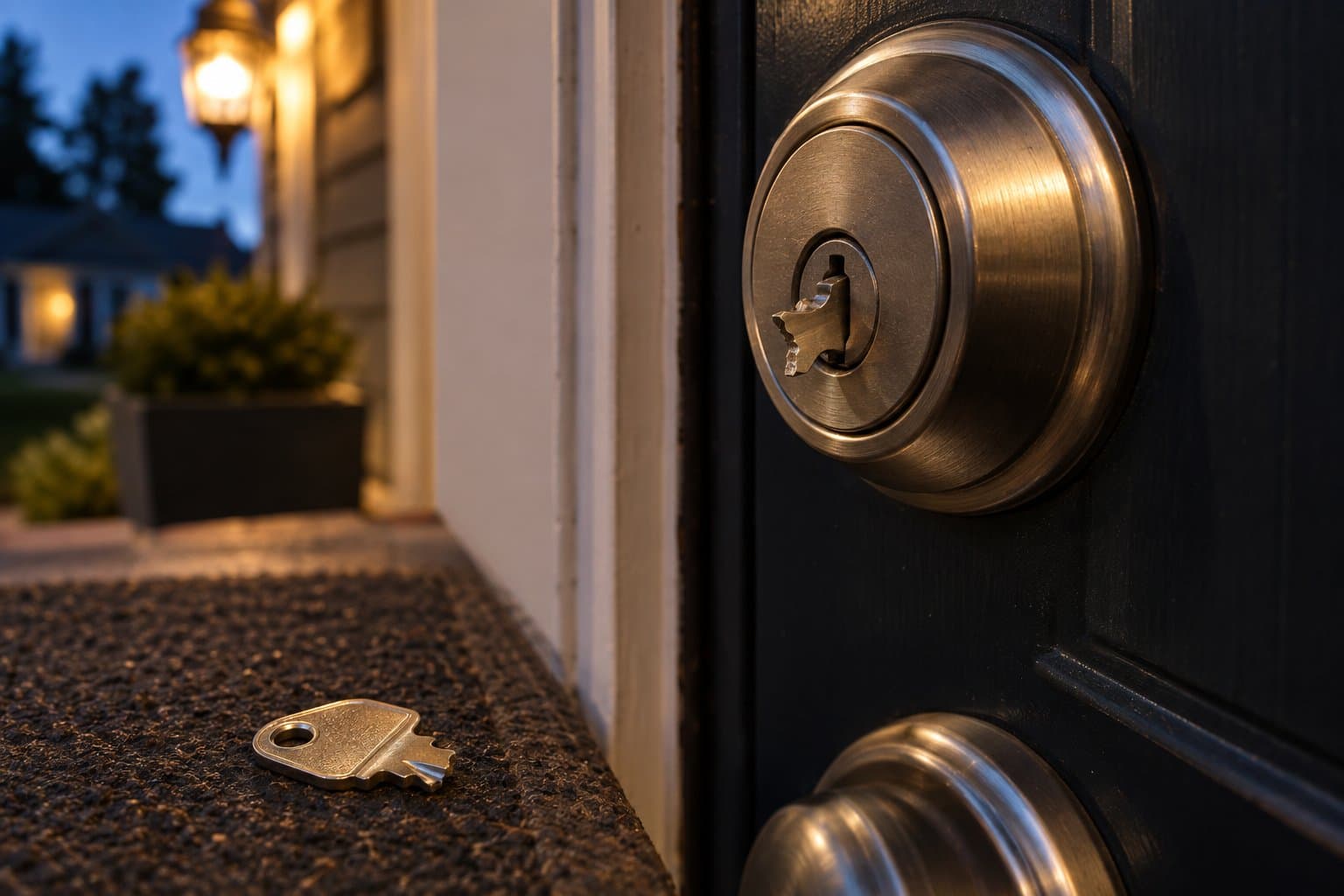
The one thing that changes the outcome is what happens next. Pushing the stub further in with another key or a pin usually turns a simple extraction into a cylinder replacement, and glue can make a lock unrecoverable. Leaving it alone gives the locksmith the best chance of saving the lock.
Why keys snap in deadbolts
Keys usually break because of wear or force. A key that has been used for years gets thinner and weaker, and a worn cylinder makes it harder to turn. Cold weather can add to this, and a deadbolt that takes a hard twist is where the weak point finally gives.
A key that has been getting stiff for weeks was often warning of exactly this. Once it snaps, the broken piece sits in the keyway and blocks any other key from going in, which is why the lock needs specialist attention rather than another attempt.
Sometimes the door is locked with the broken piece inside, so you are also locked out. In that case, see the note on identification below.
What you can check yourself
- Keep both piecesPut the part you are holding somewhere safe. A locksmith can often cut a new key from the surviving half.
- Leave the lock aloneDon't turn the deadbolt, push on the broken piece, or put a spare key or any tool into the keyway. Nothing should go in until the locksmith has looked at it.
- Keep glue and sprays awayDon't try to stick the key back together or fill the lock with anything. Lubrication is best left until the broken piece is out.
- Gather your identificationFind a driver's licence showing the address, a lease, a utility bill, or someone such as a neighbour or manager who can confirm you live or work there.
- Note the lock's recent behaviourTell the locksmith if the key had been stiff or sticking. It helps them judge whether the cylinder is worn.
When to call a locksmith
Call as soon as you have stopped using the lock. A broken key is not something to work on yourself, and a locksmith can usually deal with it without damaging the door. If a child or an animal is shut inside the home or a car, call 911 first. To arrange a locksmith, call One Call Locksmiths on (866) 690-5848. We are a referral and scheduling service, and an independent locksmith does the work.
If the door is locked, the locksmith checks identification and proof that you are entitled to enter the home or premises before opening anything. This protects you, and it is why this page does not explain how any lock is opened. The estimate is free. The locksmith looks at the lock, gives the price, and starts work only once you agree to it. Locksmith licensing varies by state, with some states regulating it and others leaving it to cities or counties, so check with your state or city if you want to know what applies where you live.
What the locksmith will do
- Remove the broken pieceThe locksmith takes the broken part out of the lock and, where needed, gets the door open once your identification is checked.
- Check the cylinderThey look for damage inside the keyway. If it is chewed up, the cylinder is replaced; if it is sound, the lock can stay.
- Cut a new keyA replacement is made from the surviving half of the key or from the lock itself.
- Lubricate and check alignmentThe lock is lubricated and the door alignment checked, so the lock turns freely and the key is not strained again.
Related questions
- Can I glue the key back together?
- No. Glue in the keyway is what makes a lock unrecoverable, and it can turn a quick extraction into a full replacement. Keep the pieces as they are and let the locksmith handle them.
- Will I need a new lock?
- Not always. If the keyway is undamaged, the lock can often stay once the broken piece is out. If it is badly worn or chewed, the locksmith will replace the cylinder and explain why before you approve the price.
- Can a new key be made if I only have half of the old one?
- Often, yes. A locksmith can usually cut a new key from the surviving half or from the lock itself, depending on the lock.
- How do I stop this happening again?
- Treat a stiff key as a warning and have the lock looked at before it fails. A worn key should be replaced, and a lock that sticks may need lubrication or a door alignment check.
One call
Free estimate. The price is agreed before the work starts.
More from One Call Locksmiths
Or send us a message
Leave your details and what is going on, and someone from the team will call you back.
One Call Locksmiths arranges the visit; the locksmith does the work and gives you the price.